




September 25, 2026
Why Blue Gloves Dominate Food Processing
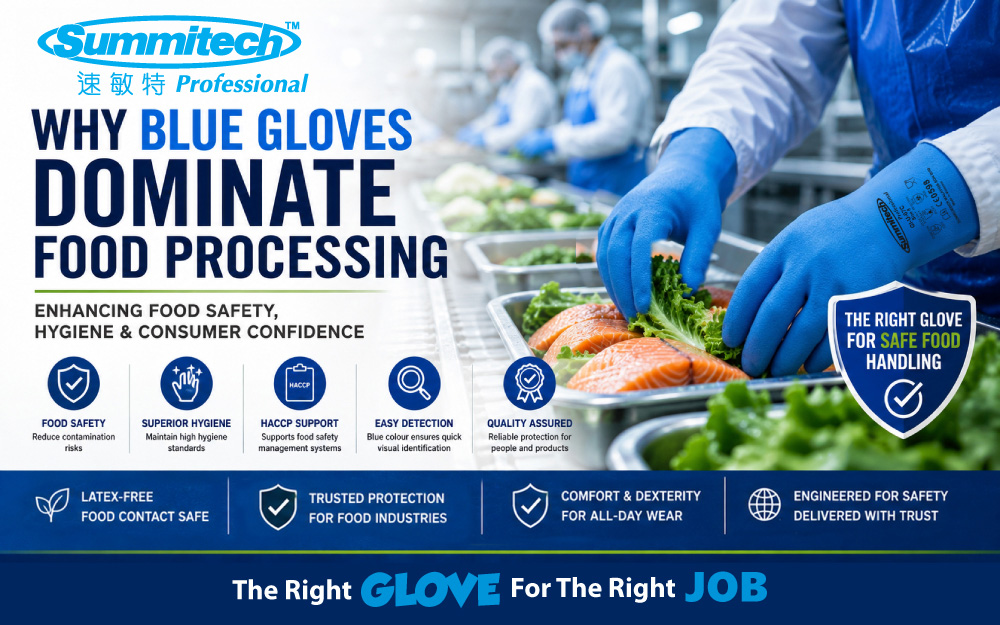
Why Blue Gloves Dominate Food Processing
The Science Behind Colour, Food Safety and Consumer Confidence
Walk into almost any food manufacturing plant, commercial kitchen or food processing facility, and you'll notice one common detail - workers are almost always wearing blue gloves.
This isn't a branding preference or fashion choice. The widespread use of blue gloves is the result of decades of food safety practices, risk management and international industry standards.
Colour plays an important role in preventing contamination, improving product inspection, and protecting consumer health. While gloves are primarily designed to protect workers and food products, selecting the correct glove colour can significantly enhance food safety systems.
At Sumirubber Malaysia, our Summitech Professional food handling gloves are designed to support hygiene, compliance and operational efficiency. Understanding why blue gloves have become the industry standard helps businesses make informed decisions when selecting hand protection.
Why Colour Matters in Food Processing
Every food manufacturer follows one common objective:
Prevent contamination before it reaches the consumer.
While much attention is given to glove material, food-grade certification and hygiene practices, glove colour is another important element of contamination control.
An easily visible glove allows workers to quickly identify tears, damage or contamination before food products are affected.
Why Blue?
Blue is rarely found naturally in food.
Unlike white, beige or transparent gloves, a blue glove fragment is much easier to detect if it accidentally enters the production process.
This simple advantage allows workers to quickly identify contamination during:
- Visual inspections
- Production line monitoring
- Quality control
- Product packaging
The result is faster corrective action and reduced product loss.
Supporting HACCP Food Safety Systems
Many food manufacturers operate under Hazard Analysis and Critical Control Point (HACCP) systems.
One objective of HACCP is to minimize every possible contamination risk.
Blue gloves support HACCP by making foreign material easier to detect during production.
Although HACCP does not specifically require blue gloves, many companies adopt them as a best practice because they improve visibility and reduce contamination risk.
Better Visibility During Production
Modern food processing facilities operate at high speed.
Workers inspect hundreds or even thousands of products every hour.
A bright blue glove provides strong visual contrast against foods such as:
- Rice
- Flour
- Meat
- Seafood
- Poultry
- Bakery products
- Dairy products
- Vegetables
This visibility makes it easier to identify:
- Torn gloves
- Missing fingertips
- Glove fragments
- Surface contamination
Improving Quality Control
Quality inspectors rely heavily on visual detection.
Blue gloves help quality teams quickly identify:
- Damaged gloves
- Improper glove usage
- Cross-contamination risks
- Worker compliance with PPE requirements
This contributes to more effective quality assurance throughout the production process.
Supporting Metal Detectable Glove Systems
Some specialised food handling gloves are manufactured with metal-detectable properties.
These gloves contain detectable additives that can be identified by metal detectors or X-ray inspection systems.
When combined with their distinctive blue colour, they provide two layers of contamination protection:
- Visual detection
- Mechanical detection
This combination further strengthens food safety programmes in high-risk production environments.
Hygiene Beyond Colour
Although blue gloves are preferred, colour alone does not guarantee food safety.
Food handling gloves should also provide:
- Food-contact compliance
- Excellent tear resistance
- Reliable grip in wet and oily conditions
- Low particulate generation
- Comfortable fit for extended wear
Selecting the appropriate glove material remains equally important.
Choosing the Right Material for Food Handling
Different food applications require different glove materials.
Nitrile Gloves
Suitable for:
- Meat processing
- Seafood handling
- Food preparation
- Oily food products
Benefits include:
- Excellent puncture resistance
- Good chemical resistance
- Latex-free
- Comfortable fit
Natural Rubber Gloves
Suitable for:
- General food handling
- Cleaning operations
- Wet processing
Benefits include:
- Excellent flexibility
- Comfortable grip
- Good elasticity
PVC Gloves
Suitable for:
- Washing operations
- Vegetable processing
- Low-risk food handling
Benefits include:
- Good resistance to oils and fats
- Cost-effective solution
- Easy cleaning
Choosing the correct glove depends on the specific task, food type and operational risks.
Worker Comfort Improves Compliance
Food processing employees often wear gloves for several hours every day.
Comfortable gloves encourage workers to:
- Wear gloves consistently
- Change gloves when required
- Maintain proper hygiene practices
- Reduce hand fatigue
Poorly fitting gloves can decrease productivity and increase the likelihood of workers removing their PPE.
Best Practices for Food Handling Gloves
To maximise food safety:
- Change gloves regularly.
- Replace damaged gloves immediately.
- Wash hands before wearing gloves.
- Never reuse disposable gloves.
- Store gloves in a clean, dry environment.
- Select gloves certified for food contact.
- Choose the correct glove size for improved dexterity.
Remember, gloves are only effective when they are used correctly.
How Summitech Professional Supports Food Safety
At Sumirubber Malaysia, our Summitech Professional food handling gloves are developed to meet the demanding requirements of modern food processing industries.
Our solutions are designed to provide:
- Reliable food-contact performance
- Excellent durability
- Comfortable all-day wear
- Secure grip in wet environments
- Consistent product quality
Whether used in food manufacturing, commercial kitchens, seafood processing or packaging operations, our gloves help businesses maintain high standards of hygiene and worker protection.
Final Thoughts
Blue gloves have become the preferred choice in food processing because they improve visibility, support contamination control and strengthen quality assurance systems.
However, colour is only one part of an effective glove selection strategy. The right combination of glove material, comfort, durability and food-contact compliance is essential for protecting both workers and consumers.
By understanding why blue gloves dominate the industry, businesses can make better PPE decisions that improve food safety, operational efficiency and customer confidence.
At Sumirubber Malaysia, we remain committed to delivering trusted Summitech Professional hand protection solutions that help food manufacturers achieve the highest standards of safety and quality.
Recent Tips

September 18, 2026
The Role of Gloves in Reducing Cross-Contamination