




September 18, 2026
The Role of Gloves in Reducing Cross-Contamination
The Role of Gloves in Reducing Cross-Contamination
How Proper Glove Use Protects Products, Processes & People
Cross-contamination is a common but often overlooked workplace risk. It occurs when unwanted substances such as microorganisms, chemicals, oils, dust, allergens or other contaminants are transferred from one person, surface, material or area to another.
Gloves can provide an important barrier against contamination, but wearing gloves alone does not guarantee protection. The effectiveness of gloves depends on selecting the right type, changing them at the right time and using them correctly.
Gloves Are a Barrier — Not a Guarantee
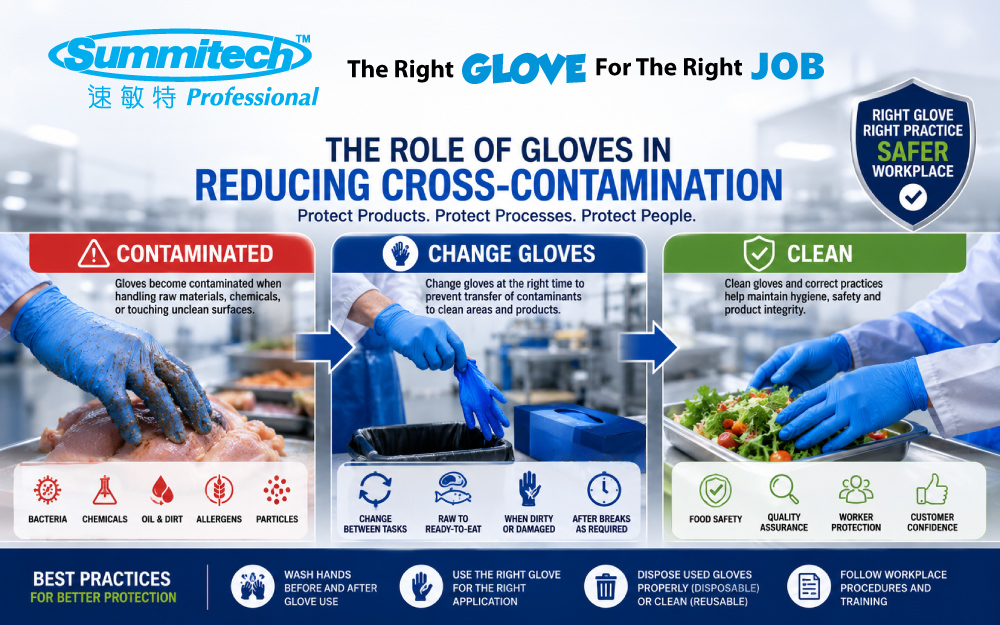
Gloves are designed to create a protective barrier between the hands and the working environment. However, once the outside of a glove becomes contaminated, touching another surface or product can transfer those contaminants.
For example, a worker handling raw materials may unintentionally transfer contaminants to finished products if the same gloves are used for both tasks.
This is why proper glove management should be part of an overall hygiene and safety programme.
How Gloves Help Reduce Cross-Contamination
1. Creating a Protective Barrier
Gloves reduce direct contact between hands and potentially contaminated materials. Depending on the application, gloves can help protect against:
- Microorganisms and biological contaminants
- Chemicals and chemical residues
- Oils and grease
- Dust and fine particles
- Food allergens
- Dirt and foreign materials
The glove material must, however, be suitable for the specific hazard. No single glove material is suitable for every application.
2. Supporting Good Hygiene Practices
Gloves should complement, not replace, proper hand hygiene.
Hands should be washed before putting on gloves and whenever required by workplace procedures. Gloves can become contaminated during use, even when they appear clean.
Workers should also avoid touching their face, phones, door handles, personal items or other unnecessary surfaces while wearing work gloves.
3. Changing Gloves at the Right Time
One of the most important controls against cross-contamination is knowing when to change gloves.
Gloves should generally be changed when:
- Moving from a contaminated task to a clean task
- Moving between raw and finished products
- Gloves become damaged, torn or heavily contaminated
- Handling different materials that should not be mixed
- Returning to work after a break, where required by workplace procedures
The goal is simple: do not allow contaminated gloves to become a vehicle for spreading contamination.
Different Industries, Different Risks
Cross-contamination risks vary depending on the working environment.
Food Processing
In food processing, gloves can help reduce direct contact with food and support hygiene controls. Different gloves may be required when moving between raw ingredients, cooked products and packaging areas.
Blue gloves are also commonly used because blue provides strong visual contrast against many food products, making glove fragments easier to notice. However, colour alone does not prevent contamination.
Chemical Handling
For chemical applications, gloves must be selected based on the specific chemical, concentration, exposure time and working conditions. Chemical-resistant gloves help prevent hazardous substances from contacting the skin and reduce the risk of transferring chemical residues to other surfaces.
Manufacturing & Maintenance
In manufacturing environments, gloves can help prevent oils, grease, dust, metal particles and other contaminants from being transferred between components, equipment and work areas.
Cleaning & General Handling
Reusable gloves are often used for cleaning and maintenance tasks. These gloves must be properly cleaned, dried, inspected and stored to prevent contamination from being carried into the next task.
Disposable vs Reusable Gloves
Both disposable and reusable gloves can play a role in contamination control.
Disposable gloves are suitable where gloves need to be changed frequently, particularly in hygiene-sensitive environments. They should not be washed and reused unless specifically designed and approved for such use.
Reusable gloves can provide durability for demanding applications but require proper cleaning, inspection and storage between uses.
Choosing between disposable and reusable gloves should depend on the application, contamination risk, required protection and workplace procedures.
Glove Integrity Matters
A damaged glove may no longer provide the intended barrier.
Before and during use, workers should look for:
- Tears and punctures
- Cracks
- Excessive thinning
- Damaged cuffs
- Coating separation
- Signs of chemical or heat degradation
Even a small defect can compromise protection and potentially allow contaminants to pass through or spread.
Common Glove-Use Mistakes
Some common practices can increase rather than reduce contamination:
- Wearing the same gloves throughout an entire shift
- Touching personal items while wearing work gloves
- Touching clean equipment after handling contaminated materials
- Using disposable gloves beyond their intended use
- Washing disposable gloves for reuse
- Failing to inspect reusable gloves
- Assuming gloves eliminate the need for hand washing
These mistakes highlight an important principle: the way gloves are used is just as important as the gloves themselves.
Building an Effective Glove Management Programme
An effective approach should include:
1. Identify the contamination risks
Understand what could be transferred and where contamination could occur.
2. Select the appropriate gloves
Consider material, fit, durability, grip, chemical resistance and the specific working environment.
3. Establish glove-changing procedures
Clearly define when gloves must be changed and communicate these requirements to workers.
4. Train employees
Workers should understand correct glove application, removal, changing and disposal or cleaning procedures.
5. Monitor compliance
Regular checks can help identify poor practices and reinforce proper glove use.
Choosing the Right Glove for Better Protection
At Summitech Professional, glove selection is approached with the understanding that different working environments require different levels and types of protection.
From food handling and general industrial applications to chemical-resistant and heavy-duty protection, selecting the right glove is an important part of maintaining a safer and more hygienic workplace.
Simple Glove-Use Checklist
Before starting work, ask:
✓ Is this the right glove for the task?
✓ Are my hands clean before putting on gloves?
✓ Are the gloves intact and undamaged?
✓ Do I know when I need to change them?
✓ Am I avoiding unnecessary contact with clean surfaces?
✓ Are reusable gloves being properly cleaned and stored?
Final Thoughts
Gloves are an important line of defence against cross-contamination, but they are not a substitute for good hygiene, proper cleaning procedures or effective workplace controls.
The best protection comes from combining the right gloves with correct hand hygiene, appropriate glove-changing practices, proper training and good workplace procedures.
Effective protection is not just about wearing gloves — it is about using them correctly.
Recent Tips

August 10, 2026
Why Blue Gloves Dominate Food Processing