




October 02, 2026
The Shelf Life of Gloves: Why Storage Conditions Matter
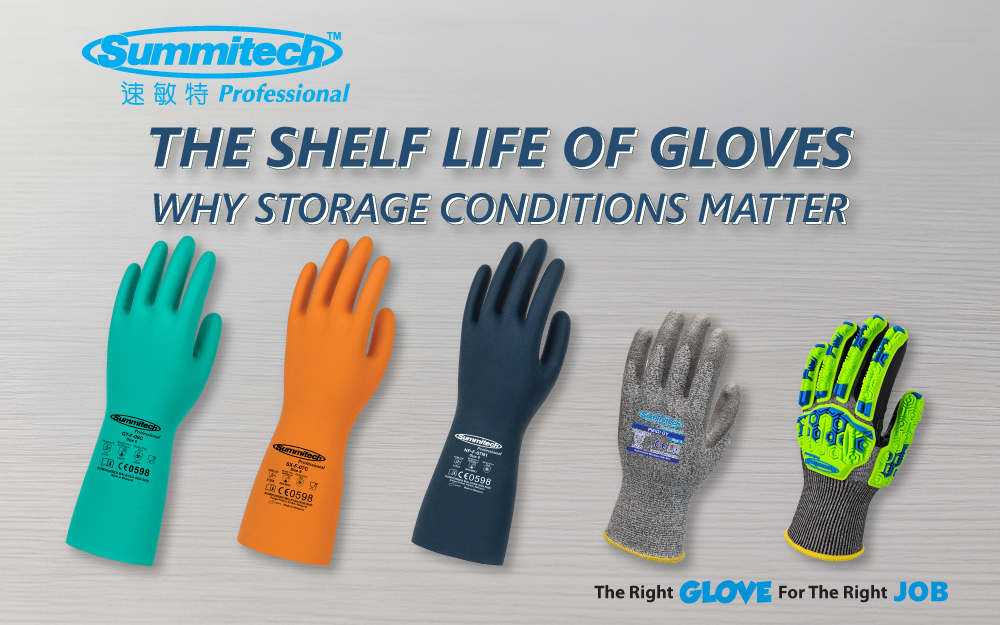
The Shelf Life of Gloves: Why Storage Conditions Matter
When choosing industrial gloves, most buyers focus on protection level, material and certifications. But there’s one important factor often overlooked: shelf life.
Just like any safety equipment, gloves don’t last forever. Their performance can degrade over time, especially when exposed to heat, humidity, sunlight, chemicals or poor storage conditions. Understanding glove shelf life ensure your team stay protected with gloves that perform as intended.
At Sumirubber Malaysia, we design every Summitech Professional glove to meet strict performance standards but proper storage plays a critical role in maintaining those standards throughout the glove’s usable life.
Why Shelf Life Matter
Whether gloves are used for chemical handling, food processing, mechanical work or general protection, their material properties determine the level of safety they provide. These materials naturally break down over time.
If gloves exceed their shelf life, you may encounter:
- Reduced tensile strength
- Loss of elasticity
- Degradation when in contact with chemicals
- Sticky, brittle or cracked surfaces
- Higher risk of tearing or puncture
- Failure to pass EN 374 or EN 388 performance levels
Using expired or poorly stored gloves can compromise worker safety - something no workplace should risk.
Shelf Life of Common Glove Materials
Different glove materials age differently. Below are general guidelines under proper storage conditions:
1. Nitrile Gloves
Shelf Life: Up to 5 years
- Highly resistant to oxidation and chemicals
- Less affected by humidity and oils
- Still vulnerable to heat and UV exposure
2. Latex (Natural Rubber) Gloves
Shelf Life: Around 3 years
- More sensitive to heat and ozone
- Natural material = faster aging
- Can become sticky or brittle with time
3. Neoprene Gloves
Shelf Life: Approx. 3–5 years
- Better resistance to weathering
- Good stability against chemicals and temperature changes
4. Specialty Gloves (Cut-resistant, thermal, coated gloves)
Shelf life varies: 3–10 years
Depends on:
- Coating type (nitrile/PU/latex)
- Liner materials (HPPE, aramid, nylon)
- Storage environment
How Improper Storage Accelerates Glove Degradation
Even within the shelf-life period, gloves can deteriorate faster when exposed to:
1. Heat
Temperatures above 35°C speed up aging of latex, neoprene, and PVC.
2. Humidity
High moisture levels encourage mould growth and can weaken material integrity.
3. UV Exposure
Direct sunlight triggers oxidation, breaking down polymers.
4. Ozone & Industrial Fumes
Nearby machinery, solvents and vapours can accelerate degradation.
5. Compressed Packaging
Excessive pressure can deforms glove or damage coatings.
6. Long-Term Storage Without Rotation
Old stock may remain unused until after expiration.
Best Practices for Storing Gloves Correctly
To maximise glove lifespan and performance:
1. Store in Cool, Dry Conditions
Ideal temperature: 10°C to 30°C
Humidity: < 60%
2. Keep Away From Sunlight
Use opaque or UV-blocking packaging.
3. Avoid Chemical Exposure
Do not store gloves nearby:
- Fuels
- Solvents
- Cleaning chemicals
- Ozone-producing machinery
4. Maintain Original Packaging
Boxes protect gloves from dust, moisture, and UV light.
5. Apply FIFO Inventory (First In, First Out)
Rotate stock to ensure older gloves are used first.
6. Check Packaging Before Use
Discard if:
- Gloves are stuck together
- Coating flakes off
- There is unusual odour
- Material feels brittle or excessively soft
Signs Your Gloves May Be Expired
Before wearing, look for these warning signs:
- Discoloration or yellowing
- Sticky Surfaces
- Crumbling or cracking
- Loss of elasticity
- Tears during donning
- Loose or distorted fit
If any of these appear, do not use the gloves and replace them immediately.
How Sumirubber Malaysia Ensures Long-Lasting Quality
Each Summitech Professional glove is manufactured under strict quality control standards to ensure maximum durability and stability throughout its shelf life. Our production process focuses on:
- High-grade raw materials
- Controlled curing and compounding
- Quality coatings that resist aging
- Rigorous testing to meet EN 374 and EN 388 standards
- Packaging designed to protect against environmental factors
However, the final performance depends on how the gloves are stored after leaving the factory making proper storage a shared responsibility.
Final Thoughts
Glove shelf life is more than an expiry date - it’s an essential part of worker safety. Proper storage ensures your gloves maintain their protective properties and perform as designed.
By understanding how glove materials age and taking steps to store them correctly, you protect your workforce, reduce unnecessary waste and ensure compliance with safety standards.
At Sumirubber Malaysia, we are committed to helping industries make informed decisions about hand protection. With proper care and storage, Summitech Professional gloves will deliver the performance and reliability your operations depend on.
Recent Tips

September 18, 2026
The Role of Gloves in Reducing Cross-Contamination