




October 16, 2026
Common Mistakes When Using Chemical Resistant Gloves
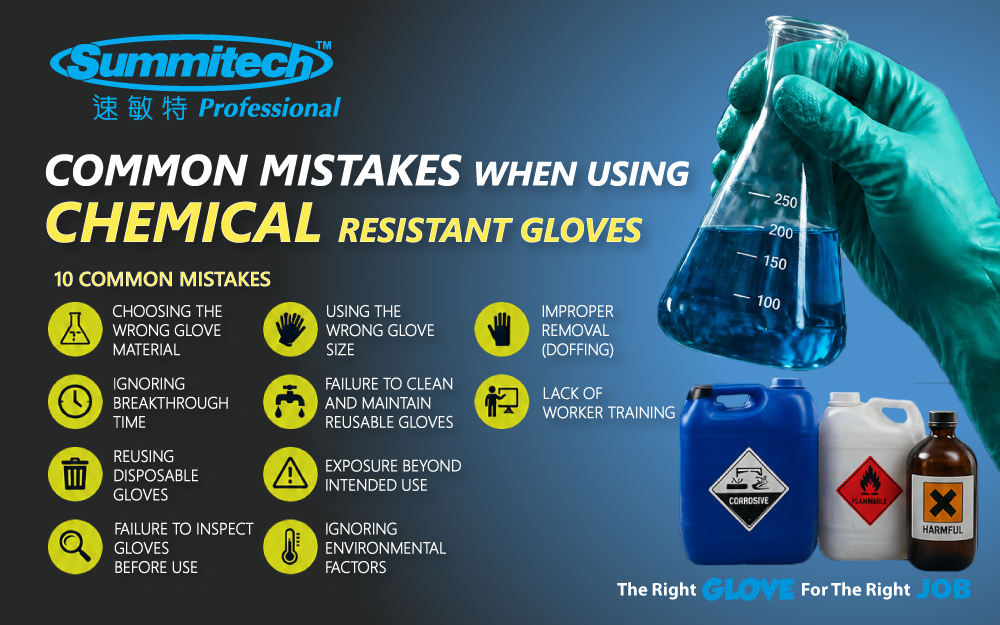
Common Mistakes When Using Chemical Resistant Gloves
Chemical-resistant gloves are a critical line of hand protection in many industries, safeguarding workers from hazardous substances such as acids, solvents, oils and cleaning agents. However, simply wearing gloves does not guarantee protection.
In reality, improper glove selection or usage can create a false sense of safety, exposing workers to serious risks.
At Sumirubber Malaysia, we frequently observe that many glove-related incidents are not caused by product failure, but by common and avoidable mistakes. Understanding these mistakes is essential to improving workplace safety and ensuring optimal glove performance.
Why Proper Usage Matters
Chemical exposure can lead to:
- Skin irritation or chemical burns
- Long-term health complications
- Reduced worker productivity
- Regulatory non-compliance
Even high-quality gloves can fail if used incorrectly. Proper knowledge and correct practices are just as important as the glove itself.
10 Common Mistakes and How to Avoid Them
Mistake 1: Choosing the Wrong Glove Material
Not all gloves provide protection against all chemicals. One of the most common mistakes is assuming that “chemical-resistant” means universal protection.
Different materials offer different level of resistance:
- Nitrile – Good resistance to oils, fuels and many chemicals
- Latex – Flexible but limited chemical resistance
- PVC – Suitable for certain acids and bases
- Neoprene – Versatile protection across wide range of chemicals
👉 Solution: Always check chemical compatibility charts and ensure select gloves based on the specific substance being handled.
Mistake 2: Ignoring Breakthrough Time
Breakthrough time indicates how long a chemical takes to penetrate the glove material.
Many users overlook this and continue using gloves beyond their safe limit.
👉 Risk: Chemicals may pass through the glove without visible damage, leading to unnoticed exposure.
👉 Solution: Select gloves with adequate breakthrough time for your application and replace them accordingly.
Mistake 3: Reusing Disposable Gloves
Disposable gloves are designed strictly for single use, yet in many workplaces, they are often reused to reduce cost.
👉 Risk:
- Increased contamination
- Reduced integrity
- Higher risk of tearing
👉 Solution: Use disposable gloves strictly for single-use applications. For repeated tasks, switch to reusable chemical-resistant gloves.
Mistake 4: Failure to Inspect Gloves Before Use
Minor defects such as:
- Pinholes
- Tears
- Weak seams
can go unnoticed but significantly compromise protection.
👉 Solution: Always perform a quick inspection before use. Replace any glove that shows signs of damage.
Mistake 5: Using the Wrong Glove Size
Improper fit affects both safety and performance:
- Gloves too tight → may tear easily
- Gloves too loose → reduced control and higher accident risk
👉 Solution: Ensure correct sizing for optimal protection and dexterity.
Mistake 6: Failure to Clean and Maintain Reusable Gloves
Reusable gloves require proper cleaning and storage. Many users:
- Do not clean gloves after use
- Store them in contaminated or humid environments
👉 Risk:
- Chemical residue buildup
- Material degradation
- Reduced lifespan
👉 Solution: Clean gloves after each use and store them in a cool, dry environment.
Mistake 7: Exposure Beyond Intended Use
Some gloves are designed for:
- Splash protection (short contact)
- Not for prolonged immersion
Using them beyond their intended purpose increases failure risk.
👉 Solution: Understand the glove’s limitations and match it to the task requirements.
Mistake 8: Ignoring Environmental Factors
External factors such as:
- Heat
- UV exposure
- Humidity
can weaken glove materials and reduce effectiveness.
👉 Solution: Store and use gloves under recommended conditions.
Mistake 9: Improper Removal (Doffing)
Incorrect removal of gloves can result in:
- Skin contact with contaminants
- Cross-contamination
👉 Solution: Train workers on proper glove removal techniques to avoid exposure.
Mistake 10: Lack of Worker Training
Even the best gloves cannot protect workers who are not properly trained.
👉 Solution:
- Provide regular PPE training
- Educate workers on glove selection and limitations
- Reinforce safety procedures
Best Practices for Chemical Glove Safety
To ensure maximum protection:
- Select the right glove material
- Check breakthrough time and degradation data
- Inspect gloves before use
- Replace gloves when necessary
- Follow proper cleaning and storage procedures
- Train workers regularly
Summitech Professional: Supporting Safer Chemical Handling
At Sumirubber Malaysia, our Summitech Professional chemical-resistant gloves are developed with:
- High-quality materials for reliable protection
- Tested performance against various chemicals
- Durable construction for industrial use
- Comfort-focused designs for extended wear
We believe that effective hand protection combines the right product with the right knowledge.
Final Thoughts
Most glove-related failures are preventable. By avoiding common mistakes and adopting proper practices, companies can significantly reduce the risk of chemical exposure.
Choosing the right glove is only the first step — using it correctly is what truly ensures safety.
At Sumirubber Malaysia, we are committed to helping industries enhance workplace safety through trusted Summitech Professional solutions and practical expertise.
Recent Tips

October 12, 2026
Eco-Friendly Gloves: Are They the Future?
September 18, 2026
The Role of Gloves in Reducing Cross-Contamination