
April 08, 2026
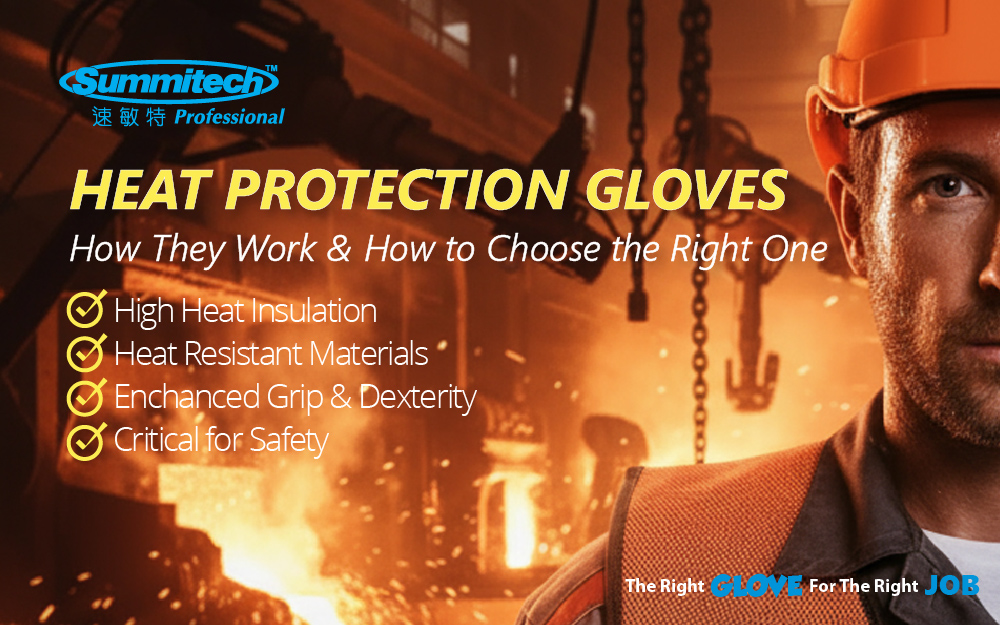
Heat Protection Gloves: How They Work & How to Choose the Right One


April 08, 2026
In many industrial environments, workers are exposed to elevated temperatures from handling hot equipment and materials to working near furnaces or heated processes. In such conditions, standard gloves are not sufficient.
Heat protection gloves are specifically designed to shield hands from thermal hazards while maintaining grip, comfort and productivity.
At Sumirubber Malaysia, our Summitech Professional gloves are engineered to provide reliable thermal protection across various industries. This article explores how heat-resistant gloves function and how to select the right type for your application.
Thermal hazards can lead to:
Even brief contact with hot surfaces can cause serious damage. That’s why choosing the right heat protection glove is critical.
Heat-resistant gloves are designed using specialized materials and construction techniques that reduce and delay heat transfer from the external surface to the hand.
Heat protection gloves use materials that resist heat transfer, such as:
These materials trap air and reduce heat conduction.
Many heat-resistant gloves are built with multiple layers, including:
This layered approach increases protection time before heat reaches the skin.
Some gloves are designed to reflect radiant heat or withstand intermittent contact with hot surfaces, depending on their construction and coating.
Understanding the type of heat exposure helps determine the correct glove:
Direct contact with hot objects (e.g., metal parts, trays).
Heat emitted from sources like furnaces or ovens.
Hot air or gases surrounding the worker.
Different gloves are designed to handle different heat conditions.
Always match the glove to the maximum expected temperature exposure. Not all heat-resistant gloves provide the same level of protection.
Thicker gloves provide more insulation but may reduce finger movement. Choose a balance between protection and usability.
Handling hot objects often requires secure grip. Coated or textured surfaces improve handling safety.
Heat-resistant gloves can become uncomfortable if not designed properly. Good inner lining helps reduce sweating and fatigue.
Heat-resistant gloves are essential in industries such as:
Each application requires specific glove characteristics depending on heat exposure and task complexity.
It is important to understand that:
Workers should always follow safety guidelines and avoid prolonged exposure beyond glove specifications.
Heat protection gloves are typically tested according to recognized under standards such as EN 407 (Thermal Risks) or ANSI/ISEA 105 (Heat Resistance) which evaluate performance in areas including:
Selecting certified gloves ensures reliable protection and consistent protection under defined working conditions.
At Sumirubber Malaysia, our Summitech Professional heat protection gloves are designed with:
Our goal is to provide gloves that not only protect workers from thermal risks but also enhance productivity, comfort and confidence on the job.
To maximise safety:
Heat protection gloves are essential for preventing burns and ensuring safe operations in high-temperature environments. However, selecting the right glove requires understanding both the type of heat exposure and the specific task requirements.
By choosing the correct gloves and using them properly, companies can significantly reduce workplace injuries while maintaining efficiency.
At Sumirubber Malaysia, we are committed to supporting industries with reliable, high-performance Summitech Professional hand protection solutions because safety should never be compromised, even under extreme conditions.

Understanding Sustainability, Performance & the Future of Hand Protection
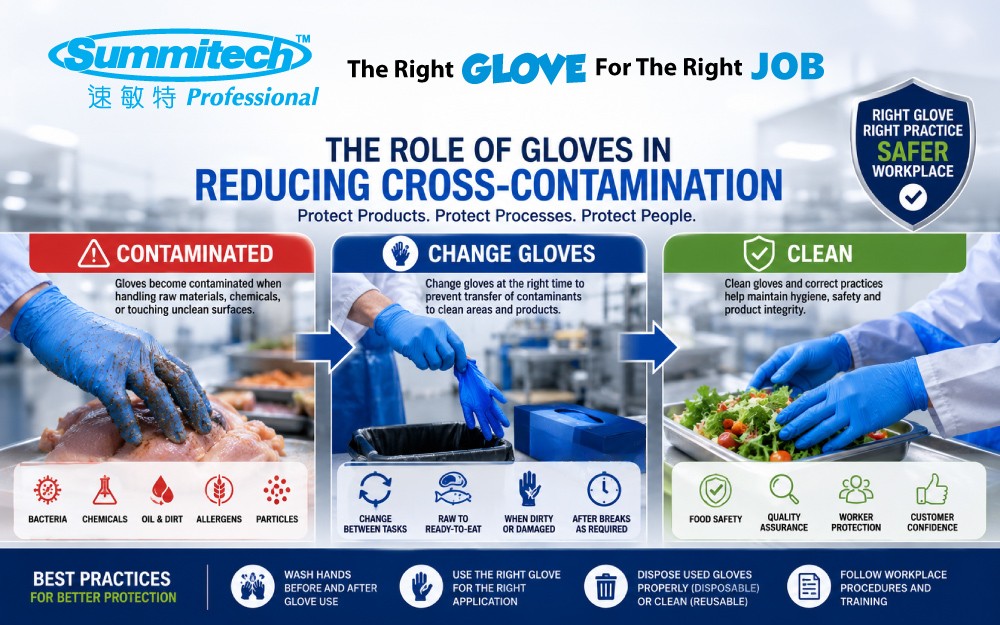
How Propoer Glove Use Protects Products, Processes & People

The Science Behind Colour, Food Safety and Consumer Confidence Walk into almost any food manufacturing plant, commercial kitchen or food processing facility, and you'll notice…