
November 13, 2026
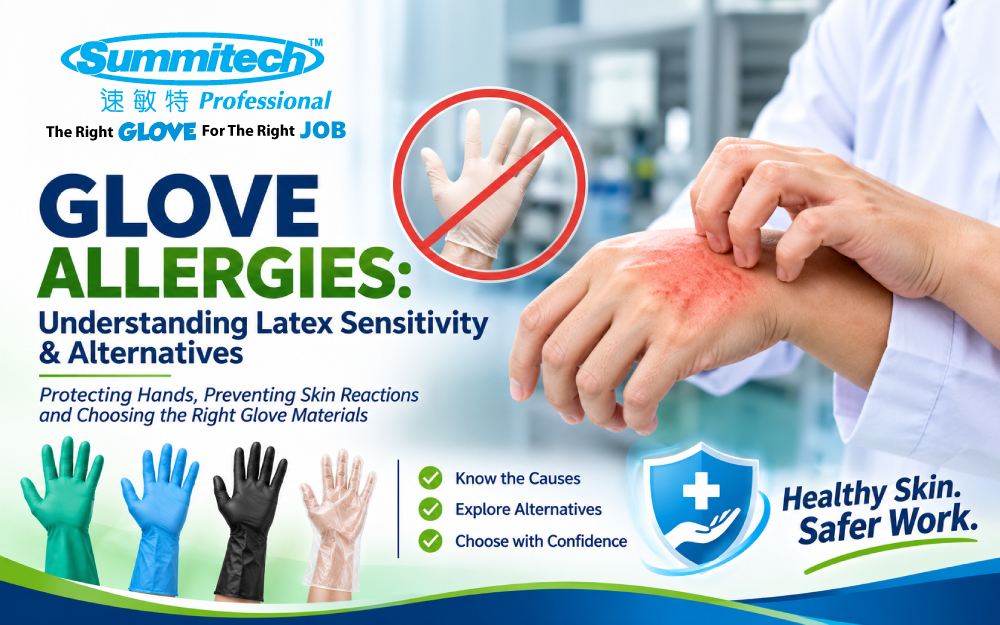
Glove Allergies: Understanding Latex Sensitivity & Alternatives


November 13, 2026
Gloves play an essential role in protecting workers against chemicals, contamination and workplace hazards. However, for some individuals, wearing gloves can also cause skin irritation or allergic reactions.
One of the most recognised concerns is natural rubber latex allergy. Although latex gloves offer flexibility, elasticity and comfort, certain proteins found in natural rubber latex can trigger reactions in sensitive individuals.
However, latex is not the only possible cause of glove-related skin problems. Chemicals used during glove manufacturing, prolonged wearing and trapped moisture can also contribute to skin irritation.
Understanding these causes helps employers and workers select suitable gloves while maintaining effective hand protection.
Not every skin reaction caused by wearing gloves is an allergy. There are three common conditions to understand:
A. Type I – Immediate Latex Allergy
Type I latex allergy is an immune response to specific proteins found in natural rubber latex. Symptoms may appear within minutes of exposure and include:
Itching, redness and swelling.
Hives or skin rashes.
Sneezing, runny nose and watery eyes.
In severe cases, breathing difficulties or anaphylaxis.
Repeated exposure may increase the risk of sensitisation among susceptible individuals.
B. Type IV – Delayed Allergic Contact Dermatitis
This reaction is often associated with chemicals used during rubber glove manufacturing, particularly rubber accelerators.
Common accelerator groups include thiurams, dithiocarbamates, mercaptobenzothiazole (MBT) and diphenylguanidine (DPG).
Unlike immediate latex allergy, symptoms may develop several hours or even one to two days after exposure. Common signs include itching, redness, dry skin, swelling and eczema-like rashes.
Importantly, some synthetic rubber gloves, including nitrile gloves, may also contain accelerators.
C. Irritant Contact Dermatitis
This is not an allergic reaction. It occurs when the skin's protective barrier is damaged by repeated exposure to irritating substances or physical conditions.
Common causes include frequent handwashing, cleaning chemicals, trapped perspiration, friction and prolonged glove wearing. Symptoms include dryness, redness, cracking and discomfort.
Glove-related skin problems can be linked to several factors:
Natural rubber latex proteins: Naturally occurring proteins can trigger immediate allergic reactions in sensitised individuals. Powdered latex gloves may also spread latex proteins through airborne particles.
Manufacturing chemicals: Rubber accelerators and other additives can cause delayed allergic contact dermatitis in sensitive users.
Heat and moisture: Prolonged glove wearing can trap perspiration, creating a warm and humid environment that weakens the skin's protective barrier.
Poor glove fit: Gloves that are too tight or unsuitable for the task may increase friction and discomfort.
Identifying the actual cause is important before selecting an alternative glove.
For individuals with natural rubber latex sensitivity, synthetic materials provide several alternatives. However, each material has different performance characteristics.
A. Nitrile Gloves
Nitrile is a synthetic rubber that does not contain natural rubber latex proteins. It is widely used in industrial, chemical handling, automotive and general-purpose applications.
Depending on its formulation and design, nitrile can provide good resistance to oils, greases and selected chemicals. However, some nitrile gloves contain rubber accelerators that may cause reactions in sensitive individuals.
B. Neoprene Gloves
Neoprene is a synthetic rubber known for its flexibility and resistance to selected chemicals. It is used in applications requiring specific chemical protection. However, its suitability depends on the chemical involved and the glove formulation.
C. PVC / Vinyl Gloves
PVC gloves do not contain natural rubber latex proteins and are commonly used for selected food handling, light cleaning and general-purpose tasks. However, they may offer less flexibility and durability than other glove materials.
D. Polyethylene (PE) Gloves
PE gloves are generally suitable for short-duration, low-risk tasks such as basic food handling. Their loose fit and limited durability make them unsuitable for many applications requiring precision, extended wear or reliable chemical protection.
Important: Latex-free does not automatically mean allergy-free or suitable for every application. Workers with suspected accelerator allergies should check product information and seek professional advice on suitable alternatives.
Choosing gloves for sensitive skin requires more than simply replacing latex with another material.
Consider the following:
Identify the cause: Determine whether the reaction may be related to latex proteins, manufacturing chemicals or general skin irritation. Consult a healthcare professional if symptoms persist.
Check material information: Review product specifications and ask manufacturers about relevant chemical additives if accelerator sensitivity is suspected.
Match protection to the task: Consider chemical resistance, permeation, breakthrough time, mechanical protection and other application requirements.
Ensure proper fit: Gloves should fit comfortably without restricting movement or creating excessive friction.
Establish replacement routines: Inspect reusable gloves for damage and deterioration. Replace disposable gloves according to workplace hygiene and safety requirements.
Good workplace practices can help reduce irritation and unnecessary exposure.
Keep hands clean and thoroughly dry before wearing gloves.
Avoid wearing gloves longer than necessary, where task requirements permit.
Replace damaged or contaminated gloves promptly.
Use suitable skin moisturisers to help maintain the skin barrier.
Store gloves according to the manufacturer's recommendations.
Educate workers on recognising skin reactions and reporting discomfort.
Seek professional assessment for persistent or worsening symptoms.
Employers should also ensure that suitable glove materials and sizes are available for workers with known sensitivities.
Glove allergies and skin irritation should not be overlooked in workplace safety programmes. While natural rubber latex is a recognised cause of immediate allergic reactions, manufacturing chemicals and prolonged glove use can also contribute to skin problems.
Selecting suitable alternatives such as nitrile, neoprene or PVC requires consideration of individual sensitivities and workplace hazards. No single glove material is suitable for every worker or application.
At Summitech Professional, we believe that choosing the right glove is an important part of protecting every hand. The right glove should not only protect against workplace hazards but also support comfort, confidence and safer working practices.
Remember: Effective hand protection starts with understanding your hands and choosing the right glove for the right job.

Understanding Sustainability, Performance & the Future of Hand Protection
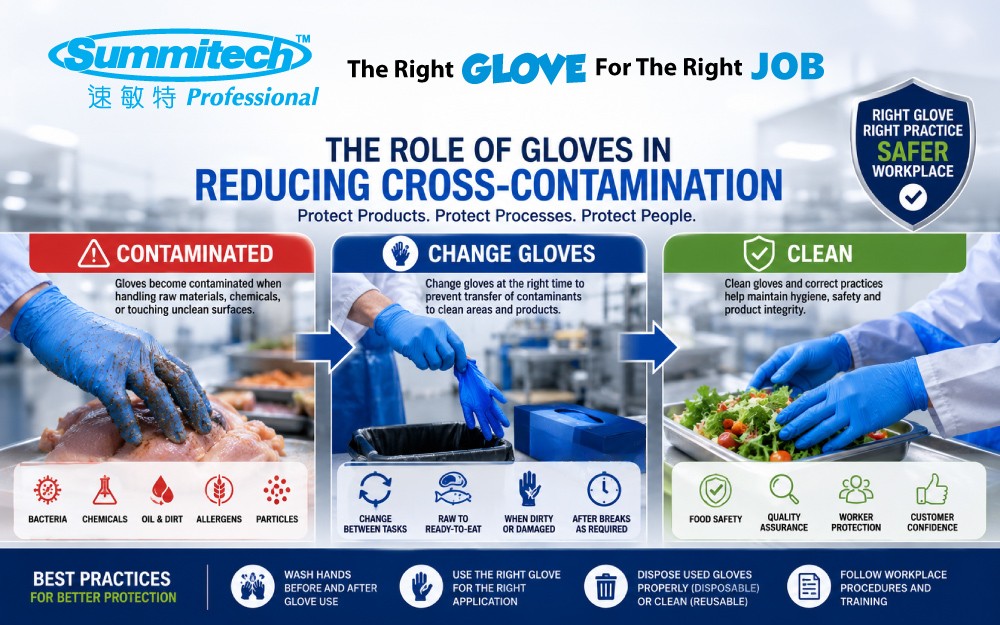
How Propoer Glove Use Protects Products, Processes & People

The Science Behind Colour, Food Safety and Consumer Confidence Walk into almost any food manufacturing plant, commercial kitchen or food processing facility, and you'll notice…